Kdemic
your research, your voice, real sources, your control.
Academic writing help that leaves the authorship where it belongs.
Kdemic drafts in your own scholarly voice, grounds claims in real and searchable literature, and records your decision at every step. Nothing leaves the system without you approving it, section by section.
Patent pending · U.S. provisional filed 1 June 2026.
Private build in controlled preview with invited researchers.
The problem
Fluent is not the same as accountable.
Voice gets flattened
General-purpose writing tools converge on one register. A researcher's own way of arguing, hedging and structuring an idea is edited out, and what returns is competent, publishable and anonymous.
Claims drift from evidence
Text can read as well-supported while quietly outrunning what the cited sources actually say. When no record connects a sentence to its source, responsibility for that sentence becomes hard to locate.
An unfair trade
Researchers writing in English as a second language are asked to choose between sounding like themselves and sounding publishable. That trade is a language-service problem, not an intellectual one.
The approach
Supervised assistance, not unattended generation.
Kdemic is built around a small number of commitments. They shape what the system is allowed to do, not only what it offers.
- Verified identityThe system works from writing that has been verified as yours. It will not build a profile from a corpus you cannot authenticate.
- Your scholarly voiceDrafting is constrained by how you actually write, including the constructions a general editor would smooth away.
- Source-accountable claimsEmpirical statements are checked against retrieved literature before they reach you, and what they rest on is shown alongside them. Reference integrity is verified in code, not by the model that wrote the draft.
- Human approvalYou accept or reject each change. There is no path through the system that skips you.
- An exportable recordDecisions, versions and approvals are written to a record you can hand to a co-author, a supervisor or an editor.
What we're building
A working private build, in controlled preview.
Kdemic runs today as an invitation-only build used by the founder and a small number of invited researchers. The public product is in development. What follows describes the current state of that build, not a planned feature list.
What you give it
- Deliverable
- Research paper
- Discipline
- Medicine
- Working title
- Adherence to national antibiotic prescribing guidelines in primary care: a cross-sectional study
What comes back — a scaffold, not prose
Where to start: draft the Methods first. How guideline adherence is operationalised decides what the Results can report and how precisely the Introduction can state the question. Every other section is downstream of that definition.
Output from the private build, typeset here for legibility and lightly condensed. No section content is written — the scaffold is structure, rationale and proportion, and the writing stays yours.
Start from a structure
Choose what you are writing and begin from a suggested, fillable outline, then work through it one section at a time.
Draft in your register
Each section is written against your own writing profile rather than a general model tone.
Resolve the sources
References are searched, matched and attached in the citation style your target journal requires.
Run a review round
A second pass critiques the draft. You keep the remarks you agree with; the rest are discarded, and the round is logged.
Verified authorship
The gate, not an optional setting.
Kdemic is being built so that a writing profile can only be constructed from work verified as your own. Verification through ORCID and institutional identity is in development and is not yet available in the current build.
This is an architectural commitment rather than a policy setting. The intent is that there is no configuration in which Kdemic writes in a voice its user has not established a right to, and no way to point the system at another researcher's corpus.
Who it is for
Individual researchers, and the institutions responsible for them.
Researchers
Particularly researchers writing in English as a second language who want language support without surrendering their intellectual identity.
Universities and institutes
For responsible-AI writing support, researcher development, and a defensible institutional position on AI-assisted authorship.
Academic editing providers
For a researcher-centred, auditable workflow that produces a record of what was changed and who approved it.
Journals and publishers
For author support and editorial quality within existing research-integrity and AI-disclosure frameworks.
Foundation
Built out of research-integrity work, not adjacent to it.
Kdemic follows from the founder's public work on publication governance at kelleniindex.com, which develops open screening measures for author and journal publishing risk, including ARI², JPI² and PPGDI. That work is published openly, with code and datasets deposited and citable.
The same commitments carry over: methods are stated, evidence is checkable, and a flag is a reason to look more closely rather than a verdict.
Founder
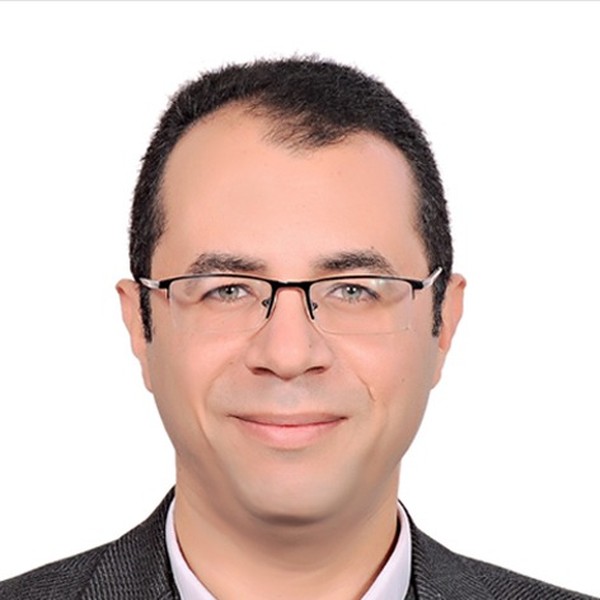
Mina T. Kelleni, MD, PhD
Founder and inventor. Lecturer of Pharmacology (equivalent to Assistant Professor) at the College of Medicine, Minia University, Egypt, and Research Fellow at INTI International University, Malaysia. Listed among the Stanford/Elsevier top 2% most-cited scientists, 2022 to 2025. Developer of the research-integrity tools at KelleniIndex.com, and originator of Kelleni’s protocol for the early management of respiratory viral infections.
Intellectual property
The computer-implemented methodology underlying Kdemic is the subject of U.S. Provisional Patent Application No. 64/079,374, filed 1 June 2026. Implementation detail is disclosed only under appropriate confidentiality and partnership arrangements.
Where we are
The build works. The next step is doing it with partners.
The methodology is developed, the intellectual-property foundation is filed, and the software runs today with invited researchers. What comes next — a hosted product and supervised institutional pilots — is work for a team rather than one person, and that is what we are assembling now.
We would like to hear from:
An engineering team
A senior technical lead and the engineers to take the build from private preview to a hosted product. We are looking for a team or an established development partner, not a single hire.
Pilot institutions
Universities, research offices, editing providers and publishers willing to run a supervised pilot with their own researchers.
Early capital
Accelerators and pre-seed investors working with research infrastructure and responsible AI.
Get in touch